


How London Professionals Can Beat Eye Strain at Work

It is 6.47pm at Liverpool Street. Your inbox is smouldering, your tabs have multiplied, and the spreadsheet you could read at 10am now looks as though it has been viewed through Chablis. If that familiar burning, blurring, end-of-day ache becomes routine, you may be dealing with eye strain. For City professionals, long screen days are occupational décor, but computer eye strain should never be treated as another agenda item.
What Causes Digital Eye Strain?

Digital eye strain is eye discomfort linked to prolonged screen use. It is rarely caused by one dramatic deadline. More often, it builds through modern habits: laptop at breakfast, dual monitors by 9am, video calls at noon, phone scrolling between meetings and emails on the train home.
When you concentrate on screens, you may blink less often, leaving eyes dry, gritty or tired. Add small text, glare from office lighting, air conditioning, poor posture and a prescription that is not keeping up, and your eyes are working hard all day. Common eye strain symptoms include tired eyes, dryness, blurred vision, light sensitivity, difficulty refocusing and the classic eye strain headache that arrives just in time to spoil your evening.
Does the 20 20 20 Rule Help?

Yes, the 20 20 20 rule can help reduce screen fatigue. Every 20 minutes, look at something around 20 feet away for 20 seconds. It is simple, memorable and less disruptive than announcing a wellness retreat between Teams calls.
For busy London professionals, attach breaks to habits already in your day. Look out of the window while a file uploads. Blink deliberately at the start of each call. Stand when reading a long email. Take one audio-only meeting as a walking call where possible. Small rituals protect your eyes without demanding a personality transplant.
How Should Your Workspace Be Set Up?

For practical eye strain relief, your screen should sit slightly below eye level and arm’s length away. Increase text size rather than leaning like a detective inspecting a ransom note. Adjust brightness so the screen feels comfortable for the room, and angle monitors away from windows or overhead lights to reduce glare.
If you use two screens, place the one you use most directly in front of you. Constantly twisting between displays can add neck and visual fatigue. Keep documents close to the screen, ideally in a holder, so your eyes are not endlessly refocusing between desk, notebook and monitor.
Can The Right Lenses Reduce Eye Strain?

Often, yes. The best lenses for screen work may be different from the glasses you wear for driving, reading or admiring your reflection in a new frame. Depending on your prescription and working distance, single vision screen lenses, occupational lenses, varifocals or anti-reflection coatings may help reduce visual effort.
Blue light glasses are often discussed in relation to screens, but they are not a universal cure for digital eye strain. The better question is what is causing your discomfort. Glare, dry eyes, focusing demand, binocular vision issues, an outdated prescription and workstation ergonomics can all play a part. At OPTIX Broadgate, we look beyond buzzwords and help match eyewear to the way you work.
When Should You Book an Eye Exam in London?
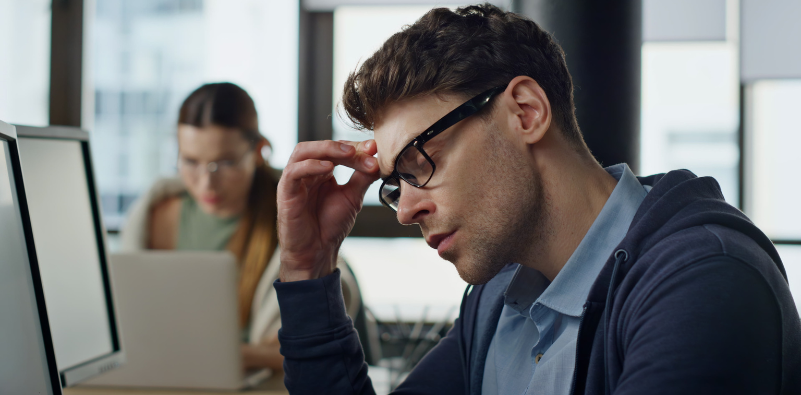
Book an eye exam in London if headaches, blur, dryness, difficulty focusing or eye discomfort are regular features of your working day. An eye exam can check whether your prescription has changed, whether both eyes are working comfortably together, and whether another issue may be contributing to your symptoms.
It also gives you time to discuss your real routine: laptop distance, office lighting, commuting, reading, meetings, phone use and hours spent in front of screens. That context matters, because eye care for a City worker should be as tailored as the diary that carries them through the week.
Don’t let eye strain become the background noise of your working day. Visit OPTIX Broadgate at 8 Octagon Mall, 100 Liverpool Street, in the City of London. Our team can advise on prescriptions, coatings, occupational lenses, blue light glasses and ways to reduce computer eye strain. Book your eye test today and see the difference the right eyewear can make.